Let's encrypt sump.org [Oct 3, 2016; Nerd]
 After not providing secure communication at all, sump.org as of now enforces use of HTTPS. Passing by without catching up - as it was once said in GDR whose end of life anniversary is being celebrated today.
Linux auf Samsung Series 9 2012 [Sep 10, 2012; Nerd, German]
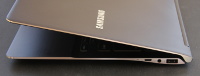 In meinen Augen zur Zeit das schönste Notebook. Aber es ist nicht
nur schön, sondern mit einen Ivy Bridge i7 auch sehr flott und ausdauernd.
Das Gehäuse besteht aus Duraluminium,
einer Legierung, die fast so hart wie Stahl, aber trotzdem nicht schwerer als
Aluminium ist. Das Material ist sehr präzise verarbeitet und vermittelt beim
ersten Anfassen ein Gefühl von Unverwüstbarkeit.
In meinen Augen zur Zeit das schönste Notebook. Aber es ist nicht
nur schön, sondern mit einen Ivy Bridge i7 auch sehr flott und ausdauernd.
Das Gehäuse besteht aus Duraluminium,
einer Legierung, die fast so hart wie Stahl, aber trotzdem nicht schwerer als
Aluminium ist. Das Material ist sehr präzise verarbeitet und vermittelt beim
ersten Anfassen ein Gefühl von Unverwüstbarkeit.
Oh the Excitement: Raspberry Pi [Feb 25, 2012; Nerd]
 It was announced today that the first batch of Raspberry Pis is going to arrive within the next couple of days.
There has been quite a stir about these, so I hope they are not sold out before I can order one.
Haven't been so eager to get a computer gadget for a long time.
It was announced today that the first batch of Raspberry Pis is going to arrive within the next couple of days.
There has been quite a stir about these, so I hope they are not sold out before I can order one.
Haven't been so eager to get a computer gadget for a long time.
Math Doodling by Vi Hart [Jan 22, 2011; Nerd]
Just stumbled across some fascinating nerdy clips:Android - more than meets the eye [May 27, 2010; Nerd]
 Now that I own a phone with Android OS I could not help looking into programming for Android.
Android uses Java as language and the SDK is decently integrated into Eclipse.
The real surprise is the architecture choice they made for these small devices.
Now that I own a phone with Android OS I could not help looking into programming for Android.
Android uses Java as language and the SDK is decently integrated into Eclipse.
The real surprise is the architecture choice they made for these small devices.
RandR 1.3 - Power to the Netbooks [May 3, 2009; Nerd, German]
By replacing xandros on my Eee PC with Ubuntu, I lost the function which would allow to emulate a 1024x768 screen either by panning or down-scaling to 1024x600. It didn't really hurt while using it by myself, because Ubuntu is doing fine with 1024x600. But it got really painful when doing presentations with a connected projector. After some fiddling with mirror mode it would typically end up with a 640x480 resolution. While this is enough for Powerpoint, it fails badly for demos. So there had to be a fix for the netbook.25C3 Selection [Jan 29, 2009; Nerd, German]
Talks which I remember as being especially interesting.WordPress Wettlauf der x-te [Apr 27, 2008; Nerd]
Da ich immer wieder belächelt werde, weil ich lieber auf meine eigene Blog-Software setze, anstatt WordPress zu verwenden, konnte ich mir eine gewisse Schadenfreude nicht verkneifen, als heute auf heise.de mal wieder eine neue WordPress-Lücke gemeldet wurde.Die Arithmetik des Diophantus [Mar 2, 2008; Nerd]
So wurden mathematische Kenntnisse vor über 1600 Jahren vermittelt. Übersetzt ins Deutsche und eine zeitgemäße mathematische Darstellung. Diophantus' Schreibweise wird ebenfalls erläutert.Software vs. Hardware [Feb 23, 2008; Nerd]
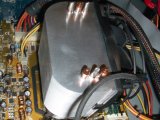 During the last weeks I barely had a working computer. My main machine slowly died on me during the last two years by crashing more and more often, until it would produce kernel panics whenever there was some load. Until recently I refused to buy a new computer because of a rule I always adhered to in the past: The new machine has to be at least twice as fast as the old one. But there seemed to be no such machine for four years now.
ELF, SLF, ULF and VLF [Dec 16, 2005; Nerd]
 Those are the acronyms assigned by the ITU to the electromagnetic frequency spectrum from 3Hz to 30kHz. There is a lot more going on on those frequencies than most people would expect.
Don't do WLAN [Sep 7, 2004; Nerd]
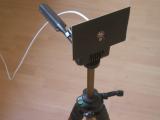 (...unless you use a secure VPN on top of it for all communication)
MySQLCC [Aug 2, 2004; Nerd]
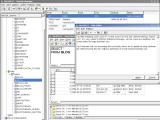 After installing SuSE Linux 9.1 I came across an nice GUI client for MySQL: MySQL Control Center. It is very similar to MSSQL Enterprise Manager, yet has some nice additions like a field editor for large text fields.